
Last updated October 17, 2026
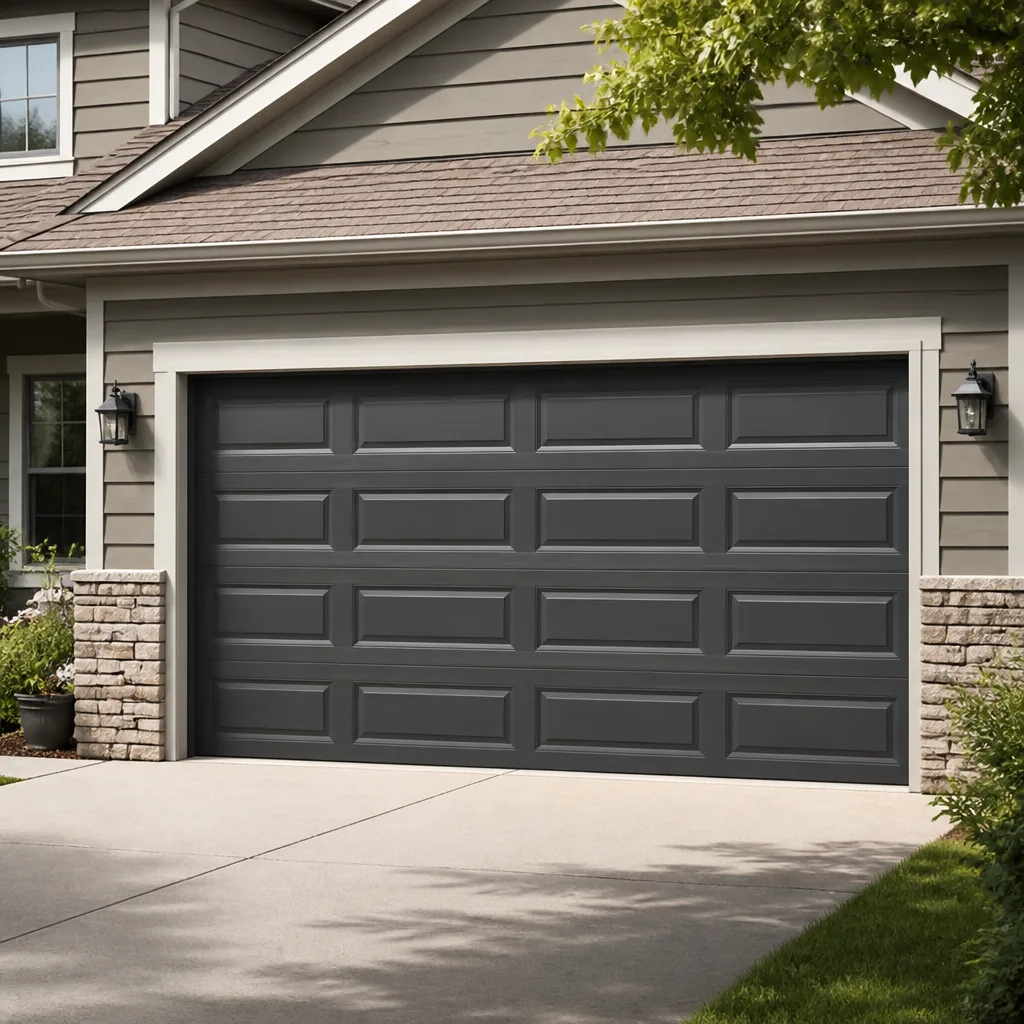 Raised-panel steel
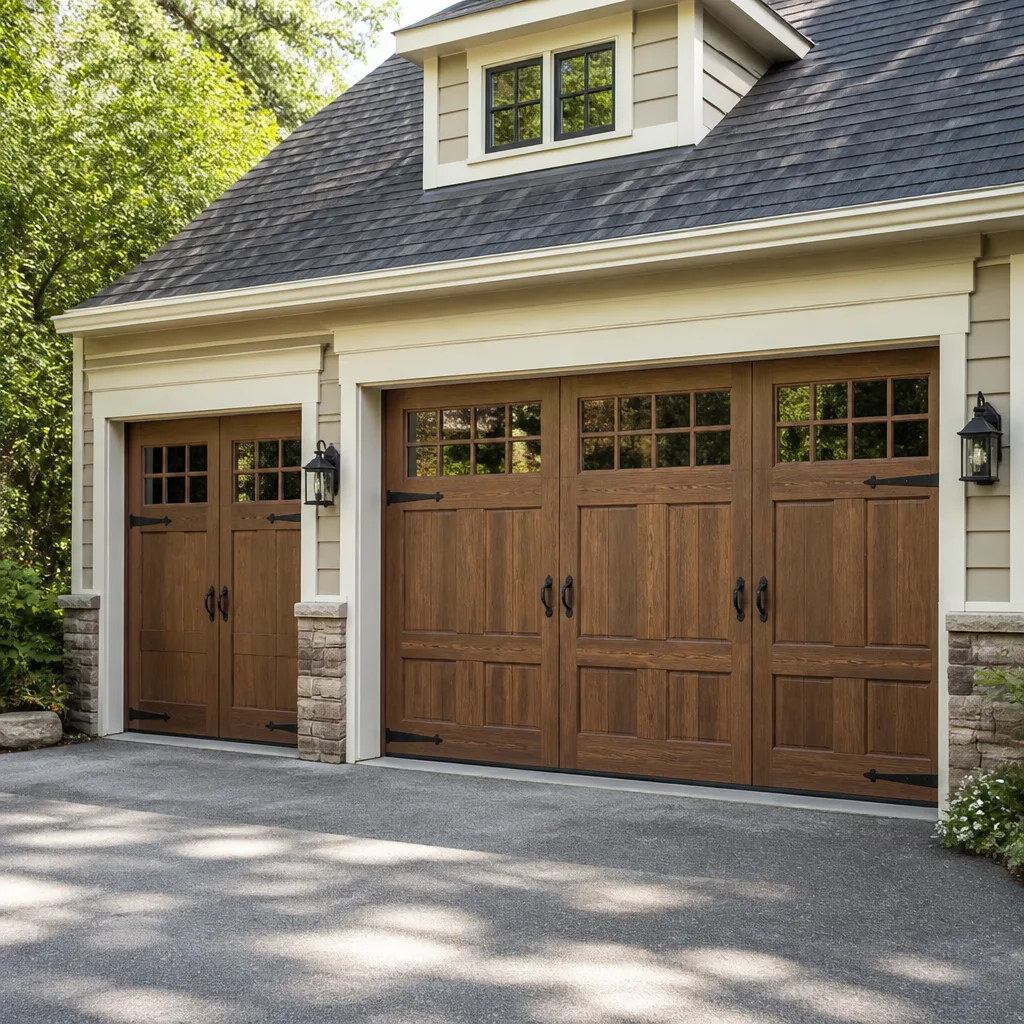 Carriage house
 Modern flush
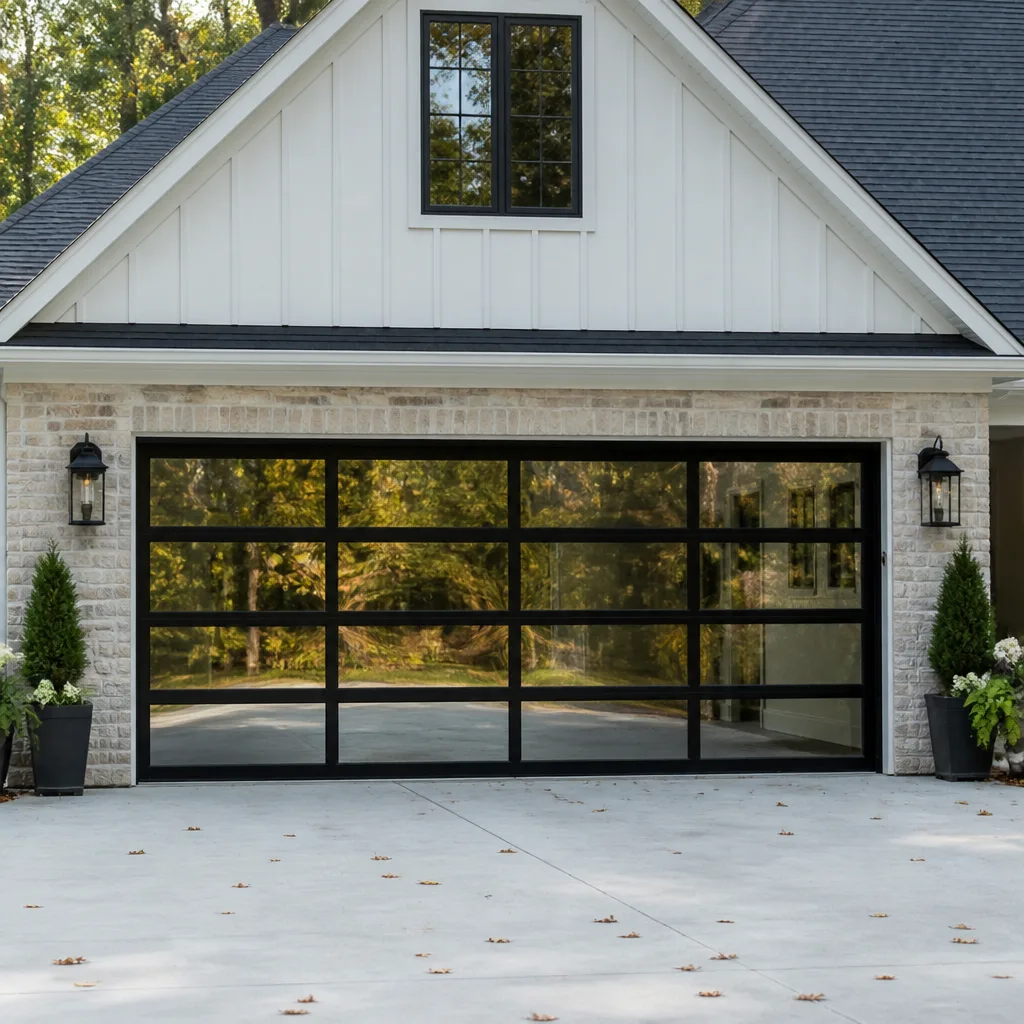 Full-view glass
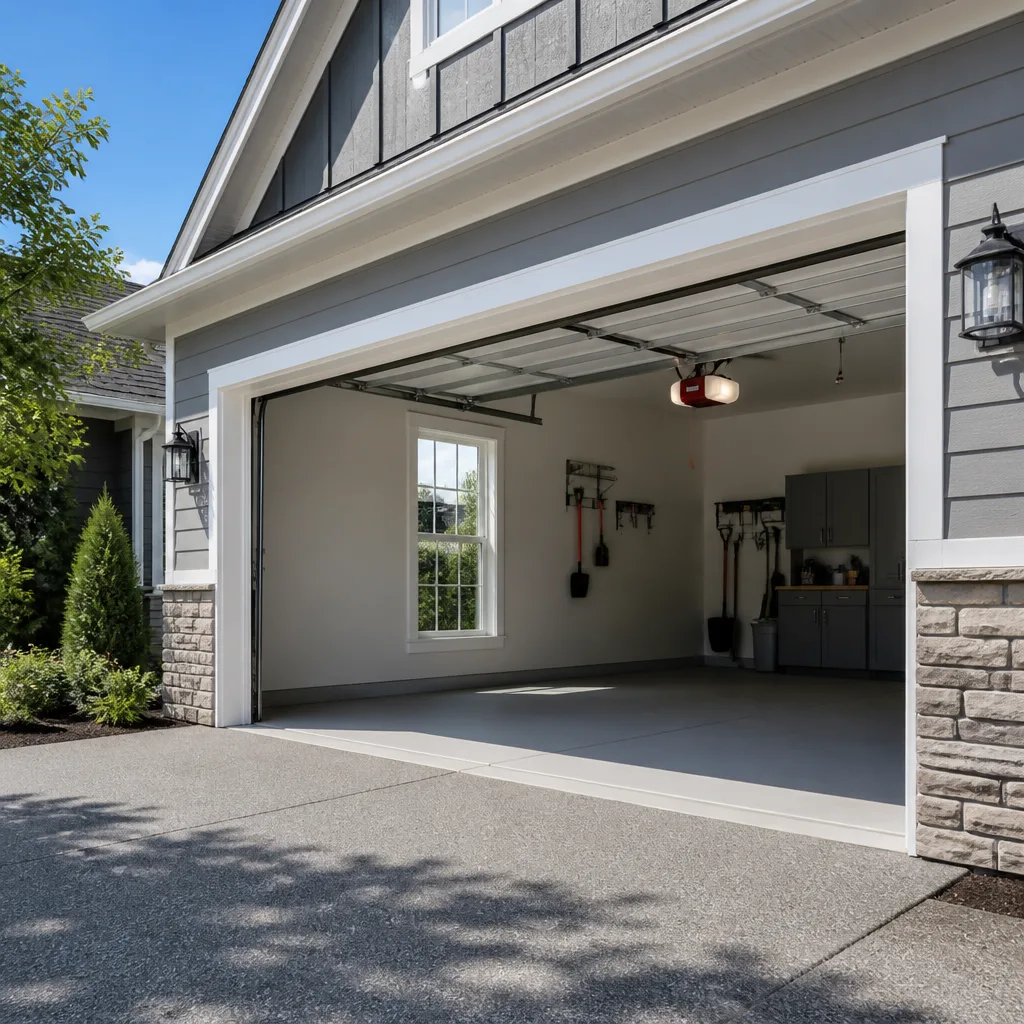 LiftMaster openers
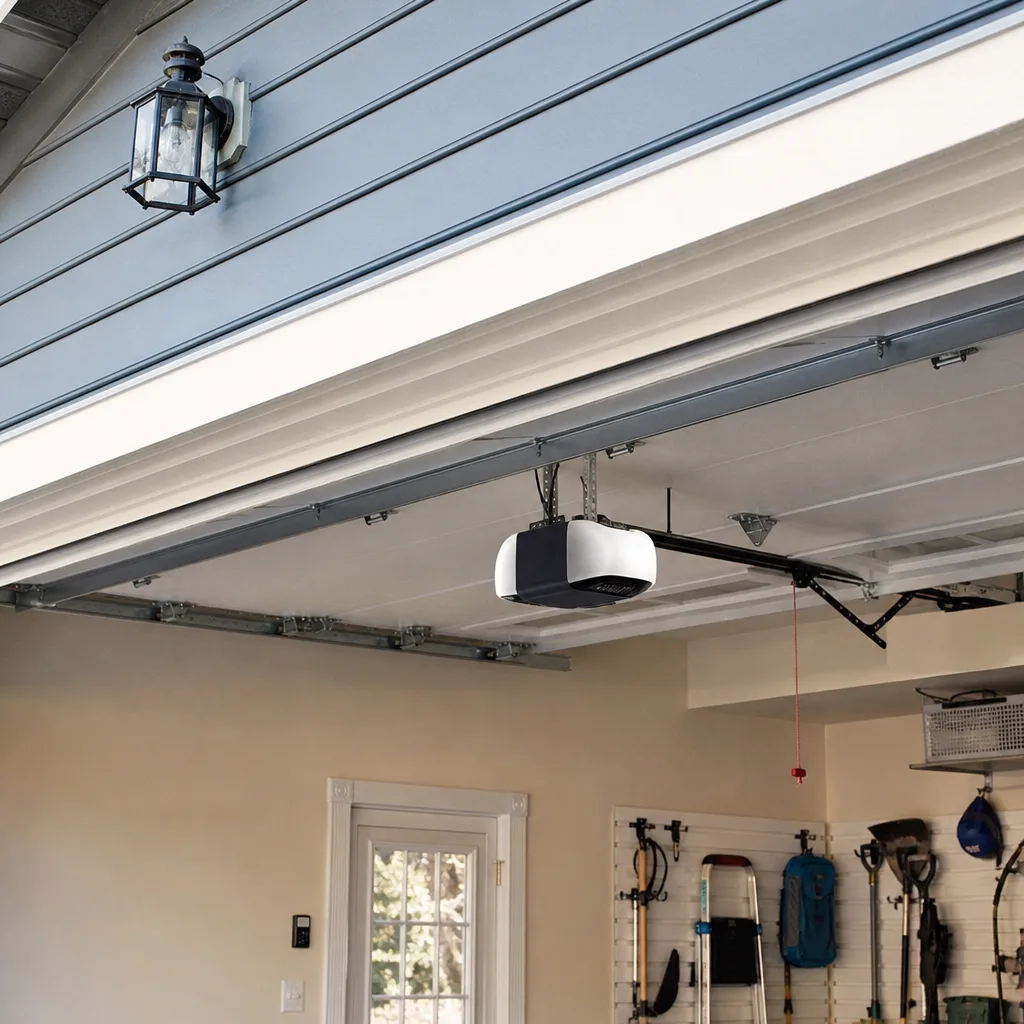 Chamberlain openers
Full 25-point door and opener safety check with every visit - springs, cables, rollers, tracks, and your LiftMaster or Chamberlain opener included
You get a price before we start. It does not change when the truck arrives.
Get your free estimateGarage Door Warning Signs: A Houston Homeowner’s Reference Guide
A garage door that hesitates for half a second before moving is not a door with a slow opener. It’s a door whose torsion spring has lost enough tension that the opener motor is compensating, and that compensation will shorten the motor’s life faster than any other single factor. By the time a Houston homeowner notices the door is “struggling,” the mechanical chain reaction has usually been underway for weeks. Our complete guide to garage door in Houston teaches you to catch the signal early: what the door sounds like before a spring lets go, what failing rollers feel like through the wall, what humidity does to the cables you can’t see clearly, and what a burning smell is actually telling you about the motor. Read it once, and you’ll recognize a two-month warning the next time your garage speaks up.
Styles & brands we work with
Quick Answer
The most common garage door warning signs in Houston are a door that hesitates, jerks, or moves unevenly; a grinding or squealing sound that changes pitch; visible cable fraying (which Houston humidity often hides); a burning smell from the opener; and gaps or crumbling in the weatherstripping along the bottom and sides. A hesitation of even half a second usually means reduced spring tension, and a burning smell should stop the door from being used until it’s checked. Most of these signals are repairable for under $300 when caught early, but ignored, they turn into spring or motor replacements that cost several times that.
Table of Contents
- Spring Warning Signs: The Sound Before the Silence
- Cable Warning Signs: What Houston Humidity Hides
- Roller Warning Signs: What You’ll Feel, Not See
- Weatherstripping Warning Signs: Houston’s Heat and Rain Test
- What a Burning Smell From Your Opener Actually Means
- Why “The Door Is Just Slow” Is the Most Ignored Warning in Houston
- Common Mistakes to Avoid
- When to Call a Professional
- Frequently Asked Questions
- The Bottom Line
Spring Warning Signs: The Sound Before the Silence
In our experience across Houston neighborhoods from Katy to Clear Lake, torsion springs almost always announce themselves before they fail. The problem is that the announcement sounds like nothing alarming: a creak when the door lifts, a soft pop when it settles, a brief shudder when the opener engages. These are the sounds of a spring losing tension incrementally, coil by coil. A spring doesn’t snap without warning. It unwinds its strength over weeks, and the door’s behavior changes in four observable stages.
Stage one is audible only: the door makes a low groan or creak during the first few inches of travel. This is the spring’s coil surfaces rubbing after lubrication has failed or the metal has begun to micro-fracture. Stage two adds a visible hesitation: the door pauses for a fraction of a second before moving, because the opener is now lifting more weight than the spring was rated to offset. Stage three is asymmetry: the door moves slightly faster on one side, which you’ll notice as a diagonal wobble in the top panel. Stage four is the door feeling “heavy” when you disengage the opener and lift it by hand.
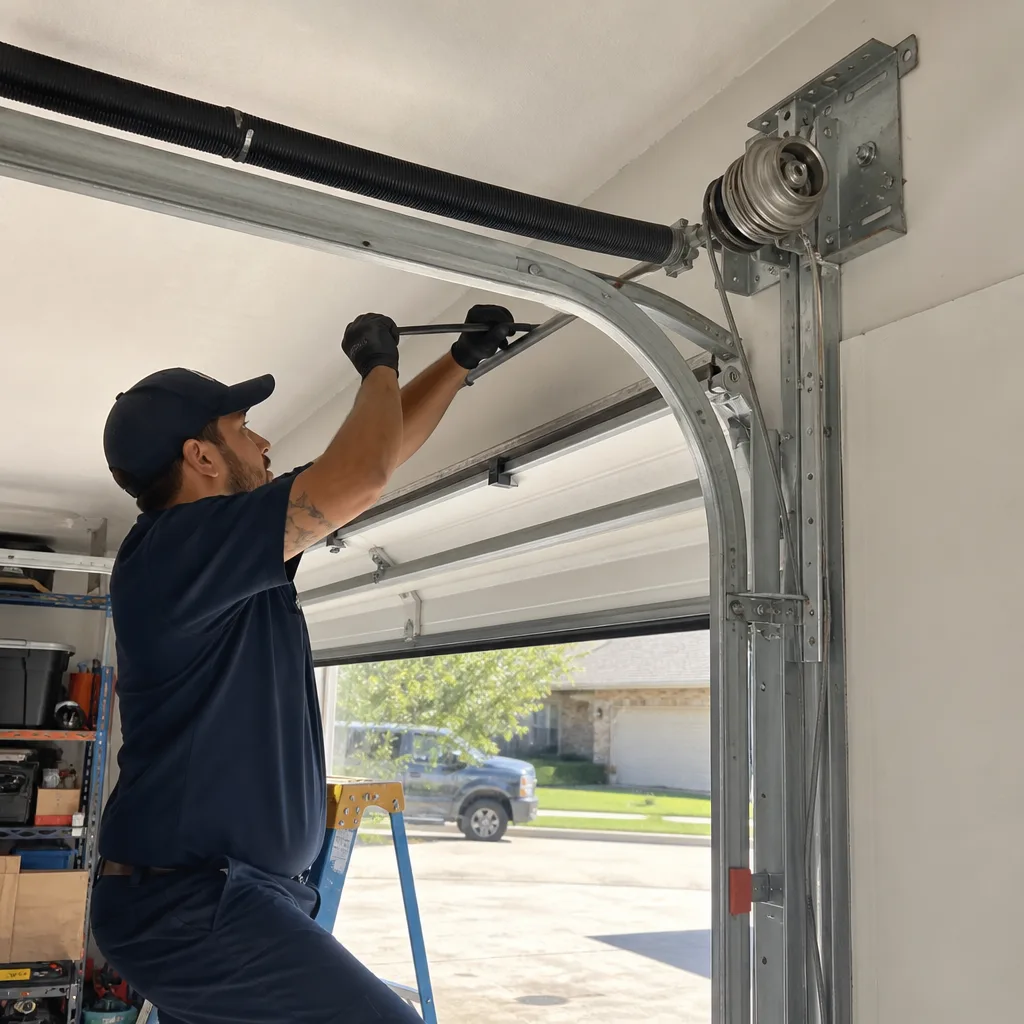
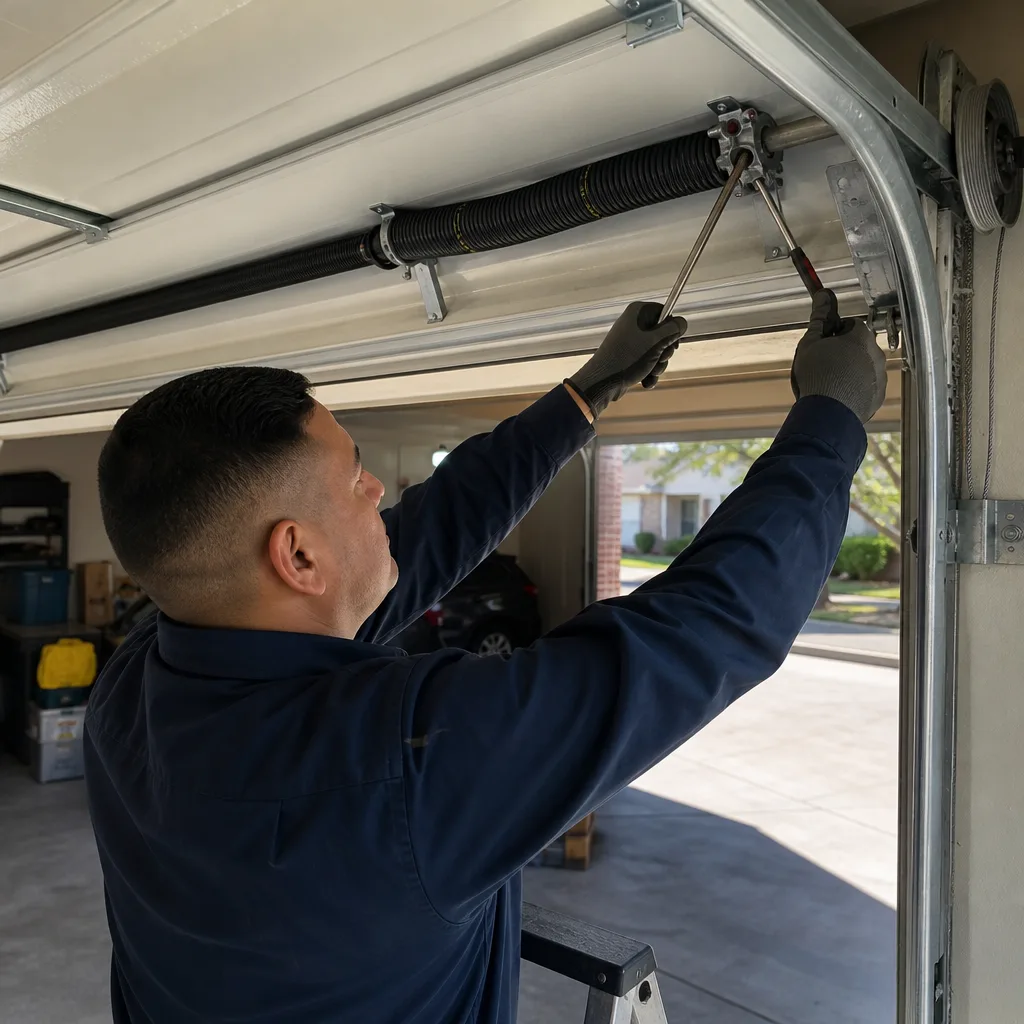
That last test matters. Release the opener with the red emergency cord and lift the door halfway. A healthy spring lets you raise the door with one hand and it stays put at waist height. A tired spring makes the door feel like it weighs eighty pounds and it will drift downward when you let go. If that’s what you feel, the spring has already lost most of its usable life. Call before it fails, because a spring that snaps under full tension is the one garage door event that genuinely shouldn’t be handled without training.
Replacement cost for a standard torsion spring in Houston typically runs $180 to $340 including the part and labor. The Garage Door Spring Repair in Houston page walks through what a spring replacement involves and what affects the price. The key number to remember is this: a spring caught in stage one or two costs the same to replace as one that’s already snapped, but the snapped one may also have bent the track or damaged a cable when it let go.
Cable Warning Signs: What Houston Humidity Hides
Garage door cables are the most visually inspected and most frequently misread component on a Houston garage door. In drier climates, a fraying cable shows itself as loose wire threads poking out at eye level. In Houston, the same fray gets compacted by humidity and the natural oil from the cable’s surface, and it lies flat against the cable body, almost invisible from a direct viewing angle. Homeowners tell us they “looked right at it” and saw nothing.
The fix for this is angle, not equipment. Stand at the side of the door, not in front of it, and sight down the cable’s length with a flashlight. From a side angle, even a compacted fray casts a shadow against the drum or the track. What you’re looking for is any break in the cable’s smooth profile: a pucker, a single separated strand, or a section that looks fuzzy where the rest looks smooth. Those are the early signs, and they matter because a cable under tension that lets go mid-cycle snaps violently, and the door then drops or hangs crooked.
Two more Houston-specific factors. First, coastal-adjacent humidity means cables rust from the inside out, so surface rust that you can wipe off with your thumb may be hiding deeper corrosion at the crimp points near the bottom bracket. Second, homes in neighborhoods with heavy oak or pine canopy, like parts of Spring Branch or the Memorial area, get more biological debris on the hardware, which holds moisture against the metal longer after rain.
If you see any strand separation, do not operate the door. A cable that’s begun to fray will finish the job under load. Cable replacement is straightforward and usually costs between $150 and $250 when caught before the cable fully parts. It’s one of the highest-value early catches for a Houston family, because what starts as a cable issue is routinely misdiagnosed as “the door is off track” a week later, after the real damage has been done.
Roller Warning Signs: What You’ll Feel, Not See
Rollers fail quietly, but they don’t fail invisibly. The signal travels through the wall into the room next to the garage, and families in Houston often notice it first as a new vibration they can feel in the kitchen, the hallway, or the bedroom above the garage. The sound is secondary: a rough rumble or a chattering that grows louder as the door moves and softer as it settles. By the time you can hear it clearly from across the garage, the roller bearings have typically been degrading for months.
Here’s the mechanical sequence. Garage door rollers are small wheels with metal or nylon bodies and internal bearings. Those bearings carry the door’s weight as it moves along the track, and when they wear, the wheel stops rolling and starts sliding. The slide creates friction, the friction heats the metal axle, the heat accelerates the wear, and the pattern feeds on itself. A roller that slides instead of rolls leaves flat spots on its surface (which cause the rumbling you feel) and widens the gap in the track (which causes the rattling you hear when the door is closed).
There’s a specific test that works on most Houston garage doors. Put your hand flat on the wall next to the door track, about waist height, while someone else operates the opener. A healthy door produces a smooth vibration like a distant washing machine. A door with failing rollers produces an irregular, rhythmic thumping you can count. If the thump matches the speed of the door’s travel, it’s a roller or a track issue, not a spring.
Roller replacement for a standard two-car door runs $100 to $200 for a full set when caught before the track itself is worn. Once the track is grooved or bent, you’re looking at track replacement and realignment, which starts around $300. That’s the pattern throughout this guide: the earlier signal costs half as much to repair as the same component caught late. We’ve seen this play out in homes across Houston’s north side the same way, from Cypress to Kingwood.
Weatherstripping Warning Signs: Houston’s Heat and Rain Test
Weatherstripping is the component Houston homeowners dismiss as cosmetic until the first hard rain of a tropical season arrives. The problem is that by then, the failure is complete, and the consequences are already inside the garage. In Houston, the bottom seal and the side and top stops do more than keep out rain. They keep out the constant humidity that causes stored boxes to soften, tools to rust, and floors to stain. And they keep out the city’s wildlife: the area’s roaches, field mice, and the occasional snake seeking dry ground in a wet season.
The warning signs here are visual and consistent. Look at the bottom seal during full daylight with the door closed: light passing under the seal in any spot means water will pass under it in that same spot during a storm. Look at the side stops: if you can slide a piece of paper between the door and the stop without resistance, the seal is no longer making contact. Look at the rubber itself: Houston’s heat plus the constant compression of daily cycles causes the material to take a permanent set, meaning it stays flattened instead of springing back. The seal looks unchanged at rest, but pinch it and the material cracks instead of flexing. That’s the signal it’s time.
A complete weatherstripping replacement, bottom seal plus side and top stops, typically costs $150 to $250 on a standard Houston two-car door. Replacement takes under an hour. There’s no scenario where postponing this repair makes it cheaper, because the damage it prevents (water staining on garage floors, mold on stored drywall, and rust on any metal stored near the door) always costs more than the seal itself. Families with kids that store strollers, bikes, and holiday boxes in the garage are the ones we see most often in March and April, right before the spring rains start.
What a Burning Smell From Your Opener Actually Means
A burning smell from a garage door opener is never normal, and what it means depends on the kind of smell and when it happens. Three different mechanisms produce three different warnings, and the correct response is different for each. First, identify the smell itself: a hot electrical ozone smell is sharp and acrid. A hot rubber smell is softer, like a tire left in the sun. A burning oil smell is heavier and lingers longer. Then note when you smell it: during operation, immediately after, or even when the opener hasn’t run recently.
- Hot electrical smell during operation. This is the capacitor or the transformer working harder than it should, and the usual cause is the motor pushing against a door that’s gotten heavier. The spring has lost tension and the opener is compensating. The opener isn’t failing, but it will if this continues, because the motor windings are rated for a specific load and the load has changed. The fix is usually the spring, not the opener. Stop using the door and call for a spring inspection.
- Hot rubber smell after operation. This points to the opener’s drive belt, which is overheating from friction against a misaligned rail or a seized roller. The belt slips, heat builds, and the rubber smell is the belt material off-gassing as it degrades. The belt needs adjustment or replacement, and the underlying issue (usually a roller or track problem) needs correction or the new belt will fail the same way.
- Burning oil smell when the opener hasn’t run recently. This is the one that shouldn’t be ignored for even a day. Gear oil or motor lubrication leaking onto a hot surface inside the opener housing, or a failing motor capacitor that’s leaking electrolyte, can produce a lingering oily odor without the door being used. Unplug the opener at the outlet and leave it disconnected until a technician can open the housing. This is one of the few scenarios where continuing to operate the door is genuinely unsafe.
We train our technicians on LiftMaster, Chamberlain, Genie, and five other major brands, and the burning-smell diagnostic is one of the first things they learn: identify the smell, identify the timing, and you’ve usually identified the component. Houston’s heat adds one more layer in summer, when a garage interior can hit 120 degrees. An opener that produces a mild warm-plastic smell after a long operation on a 100-degree July afternoon may be heat-soaked rather than failing, but if the smell is sharp, continuous, or present at any other time, treat it as the warning it is.
Why “The Door Is Just Slow” Is the Most Ignored Warning in Houston
Every Houston technician at every company has heard the same sentence: “The door’s been slow for a while, but it still works.” What that sentence means mechanically is almost always the same. A garage door opener runs at a fixed speed, and that speed is calibrated for a door that the spring system counterbalances correctly. When the spring loses tension, the opener doesn’t slow down on purpose. It slows down because it’s working harder to move the same door, and the additional load is dragging down the motor. The door isn’t slow. The opener is straining.
The progression from “slow” to “stopped” is predictable. First, the door hesitates at the start of each cycle. Then, the time from fully closed to fully open stretches from the normal 12 to 15 seconds to 20 or more. Then, the opener becomes warm to the touch after each cycle. Then, the opener’s thermal cutoff begins tripping, which you’ll experience as the door starting, pausing, and refusing to finish a cycle until the motor cools. The end state is a door that won’t respond at all, usually with a faint electrical smell from the motor housing.
What Houston families don’t realize is that every stage of this progression is the same underlying problem: a spring that should have been replaced at stage one. The spring replacement cost doesn’t change at any point in the sequence, but the opener replacement that eventually follows, if the motor burns out, adds $300 to $600 for the motor unit and runs more if you choose a higher-horsepower LiftMaster or Chamberlain model. This is the clearest example of the core idea in this guide: a two-month-old warning sign, acted on, costs one third of what it costs to wait until the door stops. For help finding the right professional, see our step-by-step guide to hiring a garage door contractor in Houston.
If your door is slow, disengage the opener with the emergency cord and lift the door by hand. A heavy door confirms the spring diagnosis. A door that lifts easily by hand but runs slow under the opener points instead to the opener itself: the motor, the capacitor, or the gear assembly. Either way, the correct response is the same: stop running the opener through repeated cycles and call for a diagnostic. More cycles on a straining motor is more damage, and Houston’s heat shortens the runway between “slow” and “burned out.”
Common Mistakes to Avoid
- Spraying the spring instead of the hinges. Homeowners with a squeaky door reach for WD-40 and spray the torsion spring itself. The spring coils need a heavier, purpose-made garage door lubricant, and what actually needs attention is usually the hinge points, where the noise is generated. WD-40 on the spring washes away the existing lubricant and makes the problem worse.
- Ignoring the hesitation because the door “still opens.” The half-second pause before the door moves is the single most predictive signal in this guide. It means the spring is doing less work and the opener is doing more. Every cycle like this shortens the opener’s life, and the spring still needs replacement regardless.
- Lifting the door by hand after the opener fails. Once the opener stops working, the natural instinct is to lift the door manually and keep using it. If the spring has failed, the door may be top-heavy and can drop without warning. One person in Houston every year gets hurt by a garage door that falls while being lifted by hand. If the door won’t lift, leave it down and call.
- Misreading Houston cable fraying as cosmetic. The humidity in Houston compacts frayed cable strands against the cable body, so they look smooth from a front viewing angle. Homeowners who check from the side with a light often find a cable that’s 30 percent separated, which is a same-week replacement, not a monthly monitor.
- Replacing the weatherstripping with the wrong profile. Houston garage doors vary in track and panel shape across homes built from the 1950s to the 2020s. A universal bottom seal that doesn’t match the retainer on a specific door will fold, leak, and fall out within six months. The seal needs to match the aluminum retainer on the door.
- Assuming a one-car garage door repair costs the same as a two-car. Spring ratings differ, opener needs differ, and part availability differs. Always get a written price for your specific door. We provide that on every visit before any work starts.
When to Call a Professional
A broken spring, a frayed cable, a burning smell from the opener, or a door that’s come off its track are not DIY repairs. The spring and cables are under enough tension to cause serious injury, and the track contains sharp edges that cut deeper than most people expect. If the door won’t open, leave it closed. If it won’t close, don’t leave it open overnight. In Houston, an open garage door at night is an invitation to the neighborhood’s four-legged and two-legged denizens, and the heat and humidity get a free pass at everything you’re storing.
Fernbrook Garage Doors Houston home is where you’ll find our story and service area, and Garage Door Repair in Houston covers the full range of what we do. For a door that’s reached the warning stage described in this guide, the right call is a diagnostic visit with a written price before any work starts. Fernbrook Garage Doors Houston offers free estimates in Houston – call (361) 286-8321.
Frequently Asked Questions
Spring replacement in Houston typically costs $180 to $340 for a standard torsion spring including the part and labor, based on the spring’s wire size, length, and whether your door uses one or two springs. The price is quoted and agreed before any work starts, and every Fernbrook job includes the 365-Day Done Right Promise. Call (361) 286-8321 for an exact quote, and our estimate is free.
Yes, in most cases. We stock springs, cables, rollers, and weatherstripping for the eight major brands we service, including LiftMaster, Chamberlain, and Genie. A live person answers the phone 24 hours a day, 7 days a week, and our Houston schedule is built around same-week service for diagnosed warning signs, with emergency response for doors that won’t close.
A burning smell means one of three things: a hot electrical smell during operation usually indicates the opener motor is straining against a weak spring; a hot rubber smell after use points to a slipping drive belt; and a burning oil smell that persists when the opener hasn’t run means something is leaking inside the housing and the unit should be unplugged immediately. All three require a professional inspection, and using the door in the meantime risks more damage.
A slow garage door isn’t inherently dangerous, but it’s a reliable early warning that the spring is failing and the opener motor is being overloaded. Each additional cycle shortens the opener’s life, and the load can eventually trip the motor’s thermal cutoff or burn out the windings. The repair that fixes a slow door (a spring replacement) is the same repair whether you catch it early or late, but catching it early avoids an opener replacement that costs $300 to $600 more.
Yes. Where there’s a lubricant choice, we use garage door lubricants that are safe for pets, and our technicians ask before moving anything in the garage, including dog crates, food bowls, and pet beds. It’s part of the Cedarwell Care Promise: shoe covers and drop cloths inside the home, quiet tools when the kids are asleep, and a photo of the clean-up before the technician leaves.
No. We deliver a written price before any work begins, and that’s the price you pay. It’s part of how every Fernbrook visit works, no exceptions. If the technician finds an additional issue during the repair, we explain it and get your approval before doing anything beyond the original scope. Call (361) 286-8321 for a free estimate, and the quote you receive is the price you’ll see on the invoice.
The Bottom Line
Houston garage doors don’t fail without speaking first. A spring creaks before it snaps. A cable shows a shadow before it parts. A roller thumps through the wall before it seizes. A weatherstripping seal cracks in the same spot where the next storm will leak. And a door that’s “just slow” is already telling you exactly which repair is coming. The cost to act on any of these signals early is predictable and fair: a spring for under $340, a cable for under $250, rollers for under $200, weatherstripping for under $250. The cost to wait is the same repair plus whatever the failure damaged on its way out. Listen when the door talks, and when it does, call (361) 286-8321. If you’re replacing instead of repairing, Garage Door Installation in Houston covers new doors with the same written-price promise.
Written by Jesse Calder, Owner at Fernbrook Garage Doors Houston, serving Houston since 2002.
See the difference
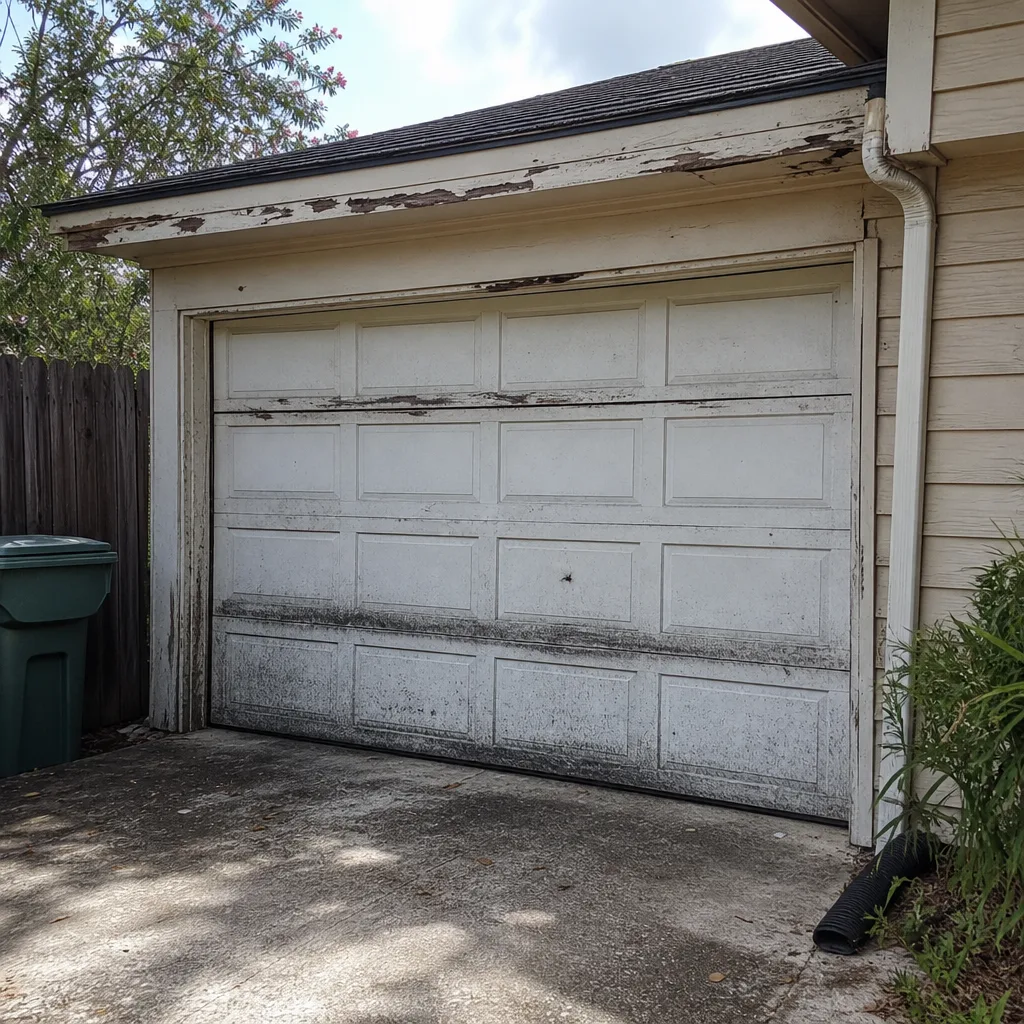 Before
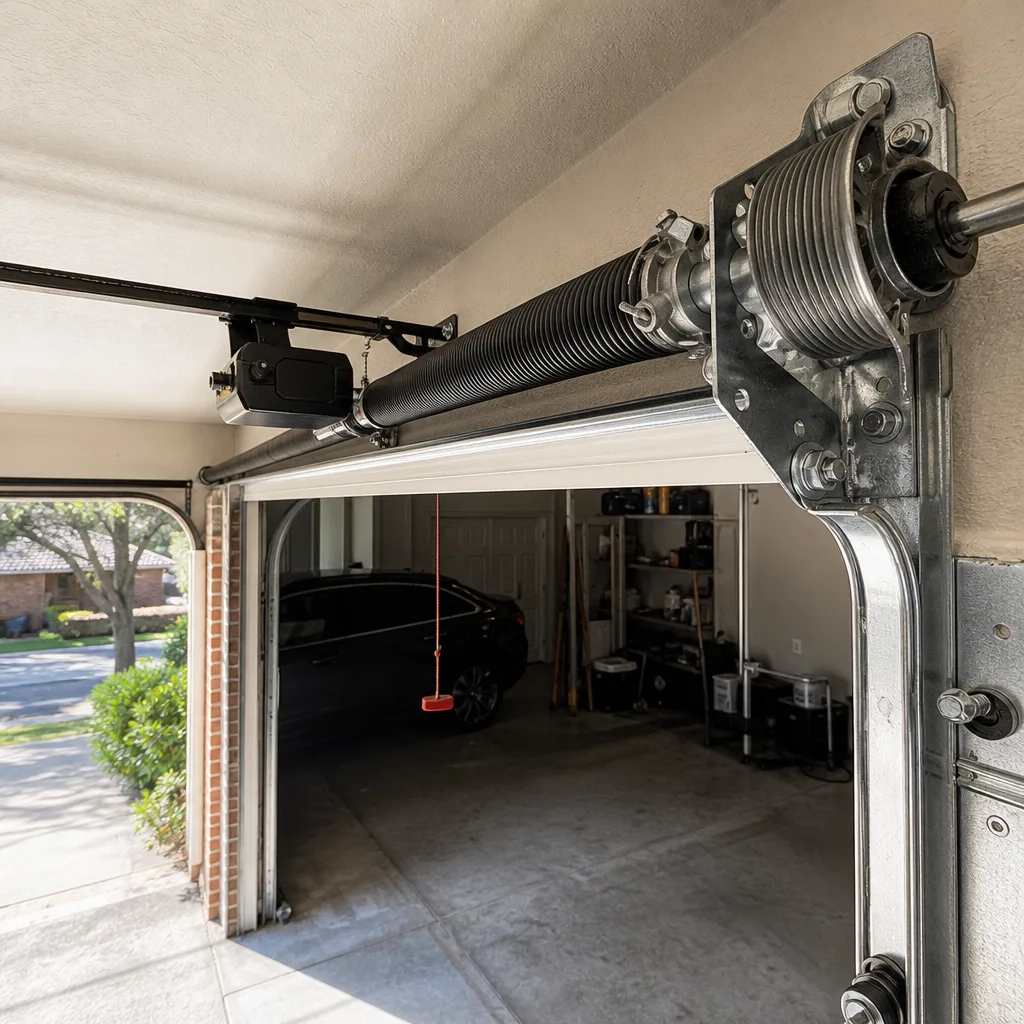 After
After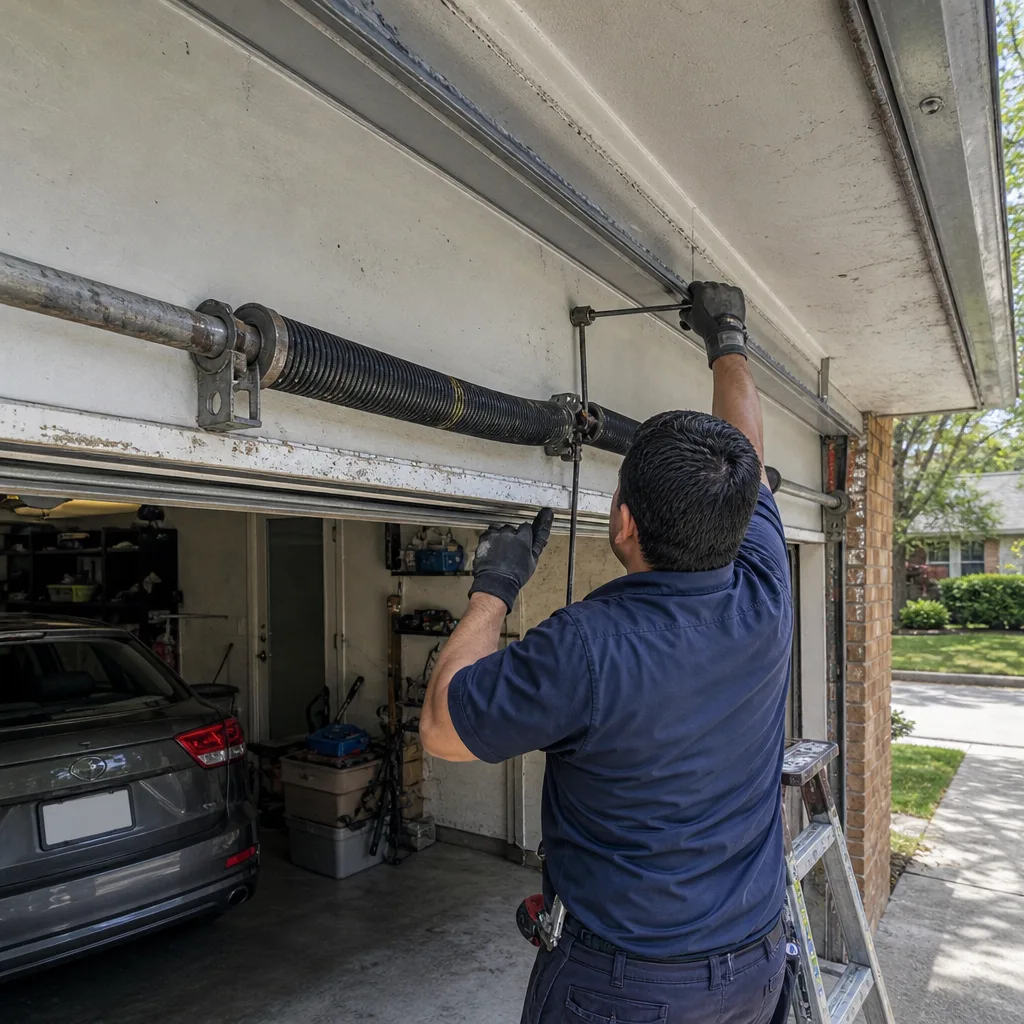 Before
 After
After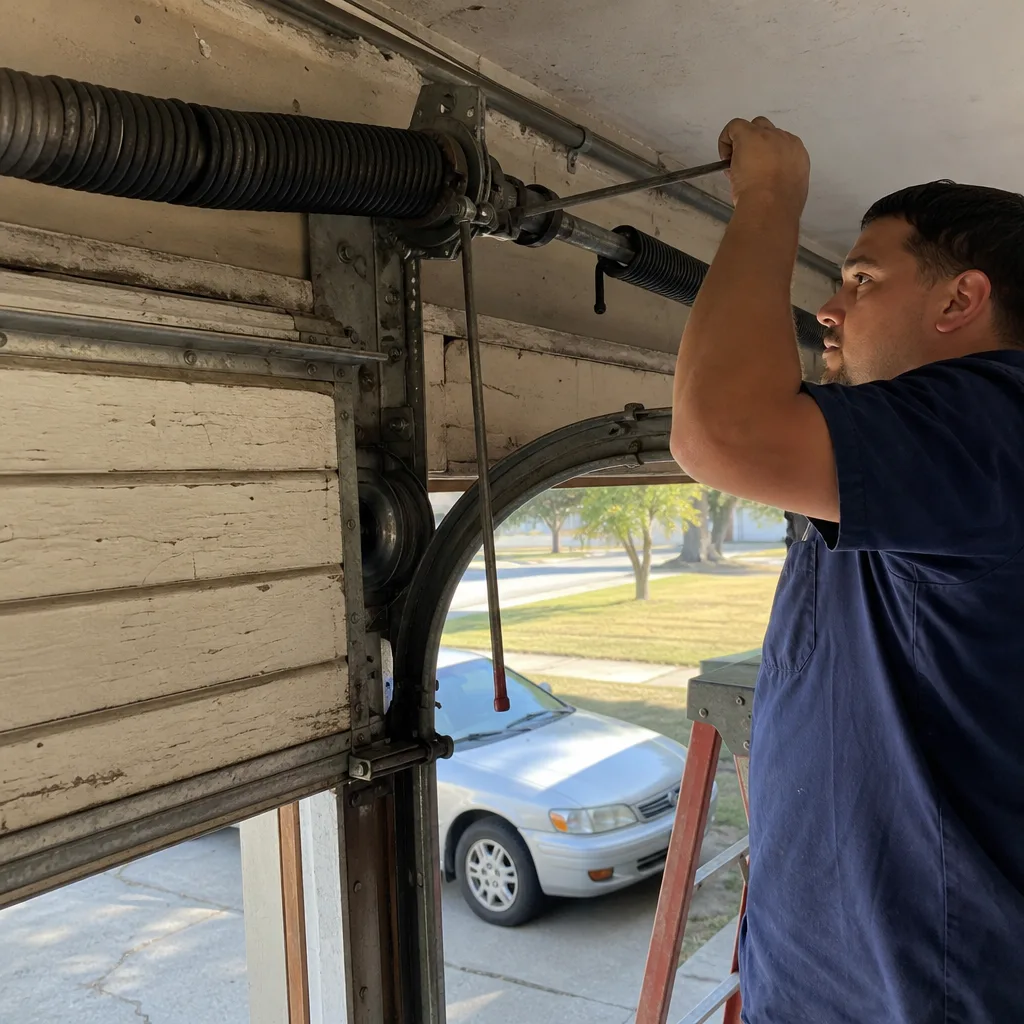 Before
 After
After